
Strong teeth start at home. Your child watches what you do with your own mouth. That includes how you brush, what you drink, and when you see a dentist. You may hear about advanced treatments like dental implants in Holt, but steady habits at home protect your child from pain, missed school, and costly fixes later. You cannot control everything that happens to your child. You can control what you model in the bathroom and at the kitchen table. This blog walks through four simple habits you can show every day. You will see how to brush and floss in front of your child, how to choose snacks that do not feed cavities, and how to treat checkups as routine. You will also learn how your words about teeth can shape your child’s courage in the dentist’s chair.
1. Brush together twice a day
Your child trusts what you do more than what you say. When you stand at the sink and brush for two full minutes, your child learns a clear rule. Teeth get cleaned in the morning and at night. No debate. No delay.
Use these steps.
- Use a soft brush with a small head.
- Use a pea sized smear of fluoride toothpaste for children over age three.
- Brush where the teeth meet the gums.
- Move in small circles on every surface.
- Spit out the foam. Do not rinse with water.
Next, turn it into a shared routine.
- Stand side by side at the sink.
- Set a simple two-minute timer.
- Let your child “brush” first. Then you finish the job.
- Use a calm voice. Avoid blame or shame.
The American Dental Association explains that fluoride toothpaste and two-minute brushing cut the risk of cavities.
2. Floss for tight spaces your child cannot reach
Toothbrush bristles cannot reach between teeth that touch. Food sits there. So do germs. That mix can cause painful holes between teeth. Your child cannot see that damage until it hurts.
Flossing removes that hidden buildup. Young children do not have the hand control to floss well. You need to do it for them. Then you can teach them to take over as they grow.
Follow this process.
- Use floss picks or plain string. Choose what you can handle well.
- Have your child lie back with their head in your lap.
- Gently slide the floss between each tooth.
- Curve it into a “C” shape around one tooth, then the other.
- Move up and down a few times. Do not snap.
Then connect the dots for your child. Explain that floss cleans “tiny alleys” that the brush cannot touch. Your steady tone can lower fear and build trust.
3. Choose tooth-safe drinks and snacks
What your child eats and drinks all day can undo careful brushing at night. Sugary drinks and sticky snacks feed mouth germs. Those germs make acid that attacks enamel. The damage adds up over time.
Use this table to compare common choices.
| Choice | Typical sugar content per serving | Effect on teeth | Better habit to model
|
| Regular soda | About 10 teaspoons | High acid. High sugar. Strong cavity risk. | Drink tap water with fluoride. |
| Fruit juice drink | About 5 to 8 teaspoons | Sticky sugar coats teeth. | Offer whole fruit with water. |
| Sports drink | About 5 teaspoons | Acid softens enamel. | Use water during and after play. |
| Fruit snacks or gummies | High sugar per small pouch | Clings to grooves between teeth. | Serve nuts, cheese, or fresh fruit. |
| Milk at meals | Natural sugar | Helpful with food. Risky if sipped in bed. | Give milk with meals. Give water at night. |
The Centers for Disease Control and Prevention note that water with fluoride protects teeth and can cut cavities in children.
So take three clear steps.
- Keep water ready at meals and between meals.
- Save sweets for rare treats with food, not all day sipping.
- Do not send a child to bed with juice, milk, or soda.
4. Treat dental visits as normal health care
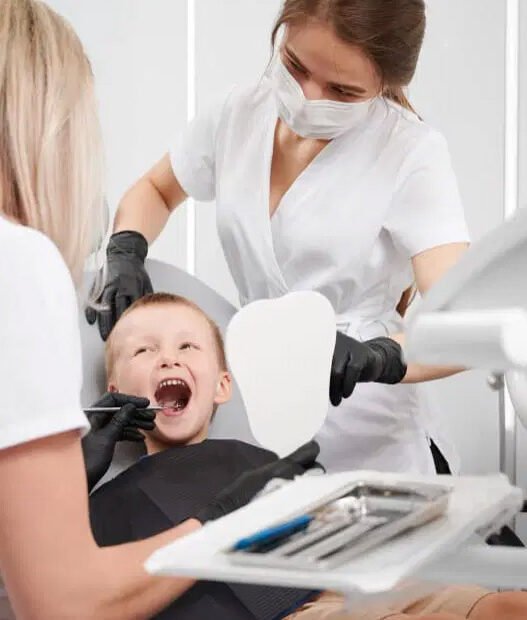
Your child studies your face in the waiting room. If you look tense or use harsh words, your child will feel alarmed. If you speak of the dentist as a trusted helper, your child can feel safe.
Use regular checkups to show three messages.
- Teeth matter as much as the rest of the body.
- Small problems are easier to fix than big ones.
- Brave means showing up, even when you feel unsure.
Prepare your child in simple ways.
- Explain what will happen in a few short steps. For example, “They will count your teeth and clean them.”
- Avoid scary words like “hurt” or “shot”. Use calm terms like “clean” and “check”.
- Bring a comfort item if the office agrees.
Then model steady behavior.
- Schedule and keep your own cleanings.
- Speak with respect about the dental team.
- Thank your child after the visit for cooperating.
Putting the four habits together
These four habits work best as a set. You brush together. You clean between your teeth. You offer water and tooth-safe snacks. You treat checkups as routine health care. Each habit sends the same clear message. Teeth deserve daily care.
You do not need perfection. You need steady effort. When you slip, name it and reset. For example, “We skipped flossing last night. We will start again now.” That kind of honesty builds trust and teaches your child that care is a daily choice, not a test.
Every small step you take today can spare your child pain, fear, and costly treatment later. Your example has weight. Use it to build a mouth that feels strong, clean, and ready for every smile.