Introduction to Residential Site and Foundation Excavation
The journey to transforming a property often begins below ground. Residential site and foundation excavation is far more than just moving dirt; it’s a precise, engineered process that sets the stage for the entire structure. Whether you’re planning a new build or expanding an existing home, the quality of this initial work dictates the stability, longevity, and ultimate usability of your space.
A well-executed excavation ensures proper foundation depth, which is crucial for structural integrity and preventing future issues like settling, lateral shifting, or wall cracking. Excavating beneath the local frost line prevents frost heave cycles from destabilizing the footings during freeze-thaw periods. It also directly impacts the potential for usable space within your basement, allowing for comfortable ceiling heights and functional layouts. Beyond the immediate structure, professional excavation contributes significantly to property value by providing a solid, well-drained, and versatile lower level.
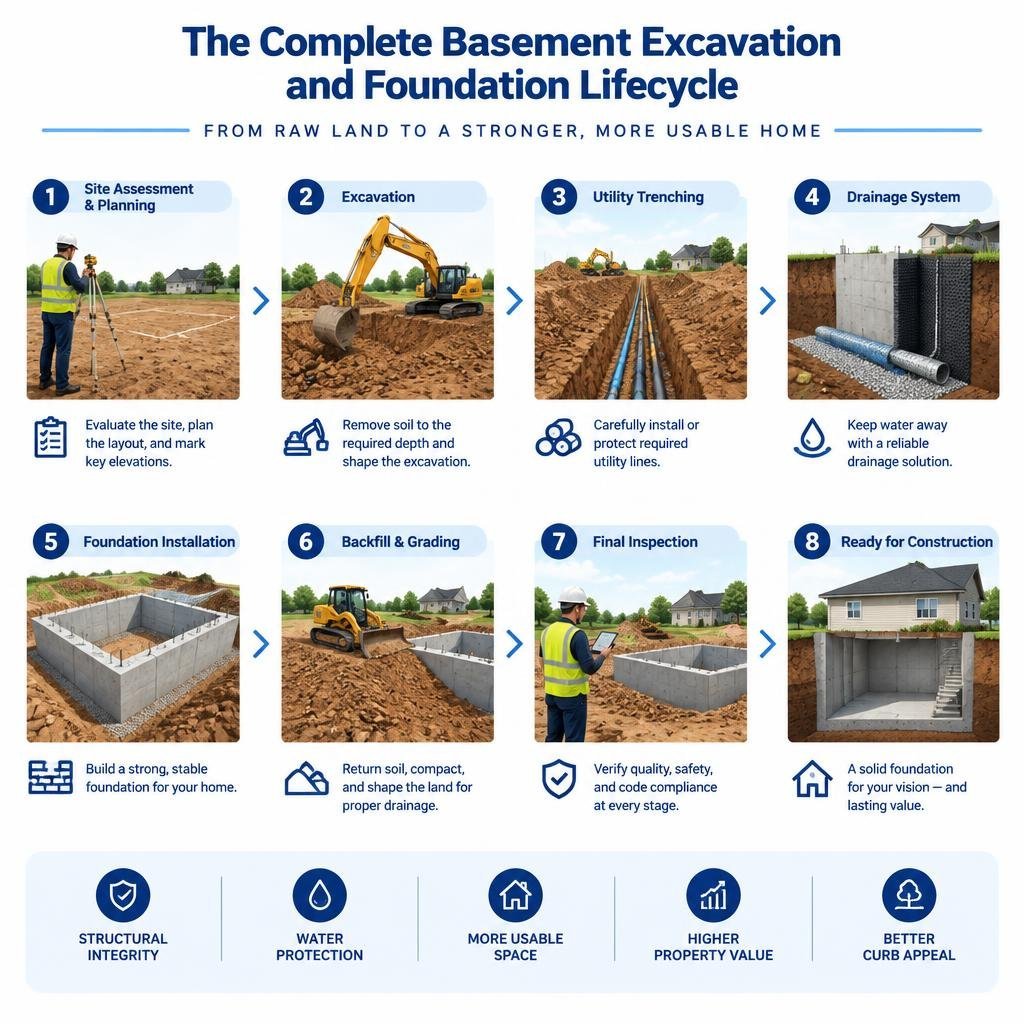
This foundational work also involves meticulous site grading to manage water runoff and enhance curb appeal, alongside careful consideration of soil bearing capacity to guarantee a safe and durable build. Subsurface soil strata must be evaluated to ensure they can carry the structural loads transferred down through the footings. Understanding the complete lifecycle of basement excavation and foundation work is key to appreciating its complexity and importance.
Core Services and Capabilities of Patriot Basement Excavation Contractors
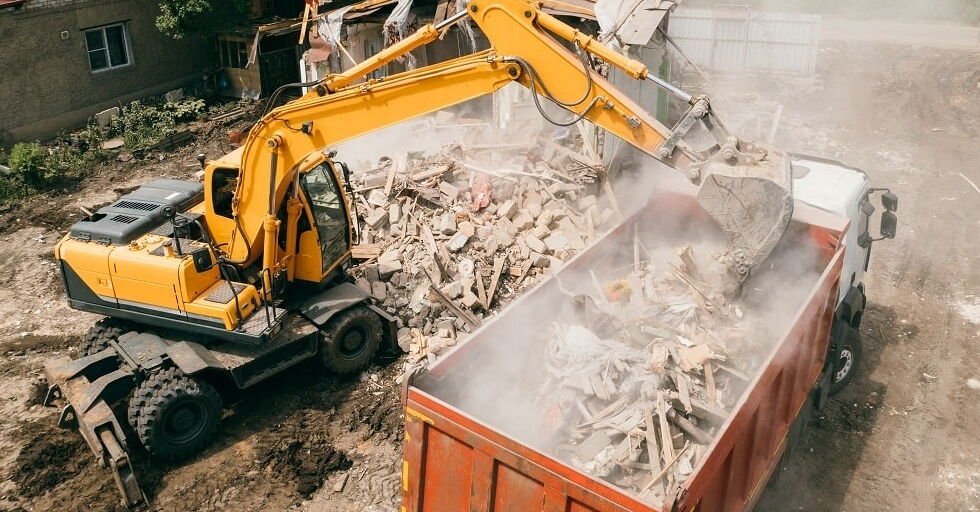
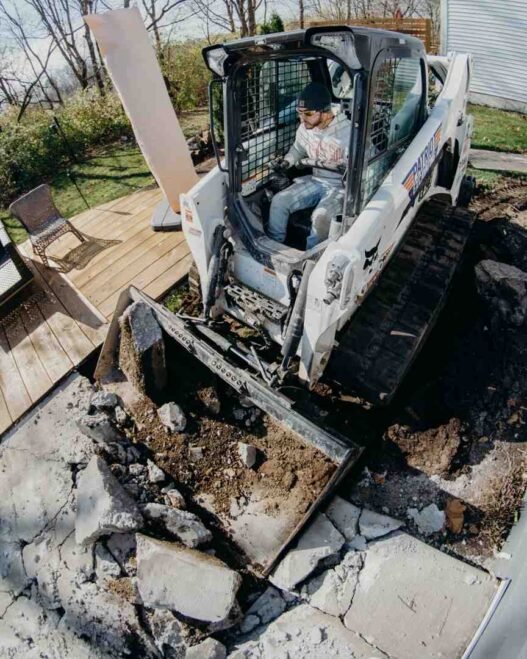
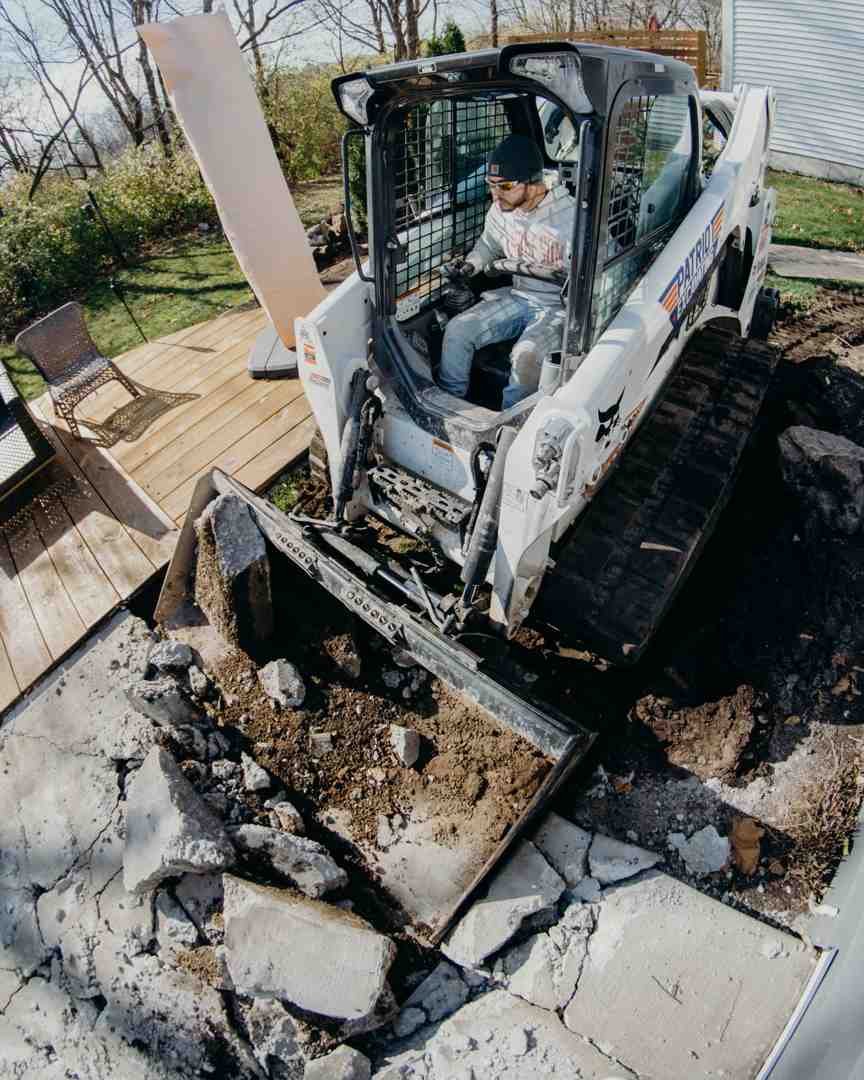
When undertaking a basement excavation project, homeowners need a partner capable of handling every phase with expertise and precision. A reputable excavation contractor brings a comprehensive suite of services, extending far beyond merely digging a hole. They deploy specialized earthmoving equipment, ranging from excavators and backhoes to skid steers, chosen specifically for the terrain and project scope.
Crucially, these professionals integrate structural engineering principles into their work, ensuring that the excavation supports the planned foundation and adheres to all safety standards. They are adept at utility trenching, carefully navigating existing lines and preparing for new ones, as well as designing and implementing effective drainage systems to protect the new basement from water intrusion. A full-service contractor manages all aspects of site preparation, transforming a raw plot or existing understructure into a ready-to-build foundation.
Specialized Digging Methods Used by Patriot Basement Excavation Contractors
Basement excavation is rarely a one-size-fits-all operation. The method chosen depends heavily on whether you’re building new, expanding an existing basement, or converting a crawl space. Experienced professionals, such as the Patriot basement excavation contractors, offer a range of specialized digging techniques tailored to specific project needs and site conditions. For those looking to delve deeper into the diverse applications of excavation, exploring resources like Patriot’s comprehensive guide can provide valuable insights into finding the right contractor for any job.
One common approach for new construction or significant expansions is open-cut digging, where the entire area to be occupied by the basement is excavated. This method is efficient for large-scale projects and allows for clear access during foundation construction.
For existing homes where a deeper or larger basement is desired without disturbing the entire structure, foundation underpinning is a critical technique. This involves systematically extending the existing foundation deeper into the ground, section by section in predetermined sequence, ensuring the house remains stable throughout the process. It’s a complex, highly specialized procedure that requires meticulous planning, load calculation, and precise execution.
Another method, bench footing, is often used to deepen basements or convert crawl spaces. This involves excavating in stages, creating a series of “benches” or steps around the perimeter of the existing foundation to support it while new sections are poured. This can be particularly effective for crawlspace conversion, transforming an unused, shallow space into a functional basement with increased headroom.
The goal of these specialized methods is often headroom expansion, making previously cramped or unusable basements into comfortable, livable spaces. Each technique demands a deep understanding of soil mechanics, structural loads, hydrostatic pressure, and precise execution to ensure the long-term integrity of the home.
Expanding Beyond Digging: Site Grading, Utilities, and Drainage Solutions
A comprehensive excavation contractor’s role extends well beyond the initial digging. They are integral to shaping the entire landscape around your home, ensuring both functionality and aesthetic appeal.
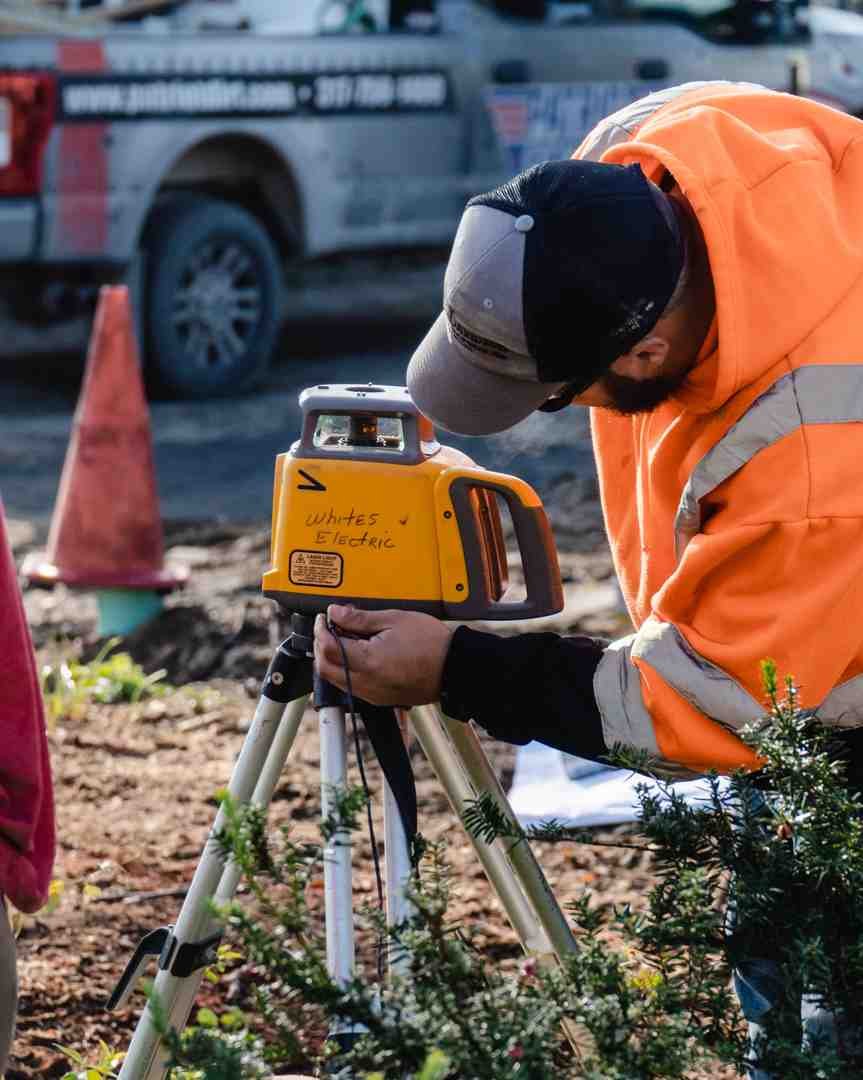
Site grading is a crucial service that involves shaping the land to direct water away from the foundation, preventing pooling and potential water damage. This process often employs advanced tools like laser grading to achieve precise slopes and levels that channel precipitation toward municipal catch basins or swales. Before any major digging, land clearing may be necessary to remove trees, brush, root systems, and debris, preparing the site for construction.
Modern excavation also incorporates specialized techniques like hydrovac excavation, which uses pressurized water and a powerful vacuum system to safely and non-destructively uncover underground utilities. This method is invaluable for avoiding costly and dangerous strikes on gas, water, or electrical lines.
Effective drainage systems are paramount for a dry basement. Contractors install solutions like French drains, which are trenches filled with gravel and a perforated pipe, designed to divert groundwater away from the foundation perimeter. They also implement stormwater management strategies to handle rainwater runoff from roofs and paved surfaces. Finally, proper soil compaction using vibratory rollers or plate compactors is essential after excavation and backfilling to prevent future settling, ensuring a stable base for landscaping and other external features.
Structural Safety, Shoring Systems, and Building Code Compliance
Safety is the paramount concern in any basement excavation project. The integrity of the existing structure, the safety of workers, and compliance with local regulations are non-negotiable. Experienced excavation contractors prioritize these aspects from the outset.
Understanding soil mechanics is fundamental. Contractors assess soil types, stability, cohesion, and water content to predict how the ground will behave during and after excavation. This informs the design and implementation of robust shoring systems, which are temporary structures used to support the walls of an excavation, preventing dangerous cave-ins. These can range from hydraulic trench boxes and timber bracing to complex steel soldier piles and lagging sheets, depending on the depth and soil conditions.
Before any ground is broken, contractors ensure all necessary municipal permits are secured. This involves navigating local zoning laws and building codes, which dictate everything from excavation depth to setback requirements and environmental runoff limits. They also undertake thorough utility locating to identify and mark all underground pipes, cables, and lines, a critical step to prevent accidental damage during digging. Structural engineers are often consulted to design specialized structural shoring plans, particularly when underpinning or deepening an existing basement, to guarantee the ongoing stability of the home. Adherence to these safety protocols and compliance measures is what distinguishes a professional and responsible excavation contractor.
Cost Factors, Timelines, and Selection Criteria for Earthmoving Projects
Embarking on a basement excavation project involves a significant investment, both in terms of finances and time. Understanding the various factors that influence these aspects is crucial for effective planning and decision-making. The overall project timeline is affected by numerous variables, including the scope of work, seasonal weather conditions, soil moisture levels, and the efficiency of the excavation team.
Access to appropriate equipment is another key consideration; tight spaces, steep slopes, or challenging terrain may require specialized mini-excavators or compact track loaders, impacting both cost and schedule. Before any digging commences, geotechnical surveys are often necessary to assess soil composition, groundwater levels, and bedrock, providing vital information that can influence excavation methods and costs. The volume of material to be moved, measured in cubic yardage, directly correlates with equipment usage, labor hours, hauling logistics, and disposal fees at local dump facilities. Finally, the specific soil composition (e.g., expansive clay, silty loam, dense sand, or solid rock) dictates the ease of excavation, the type of equipment required, and the need for additional measures like rock breaking, trench stabilization, or dewatering pumps, all of which contribute to the overall project’s complexity and expense.
Analyzing Excavation Pricing, Depth Adjustments, and Scope Variables
When considering basement excavation, homeowners often focus on the bottom line. However, a detailed understanding of what drives the costs is more valuable than a single price tag. The overall expense is influenced by several interconnected factors, making each project unique.
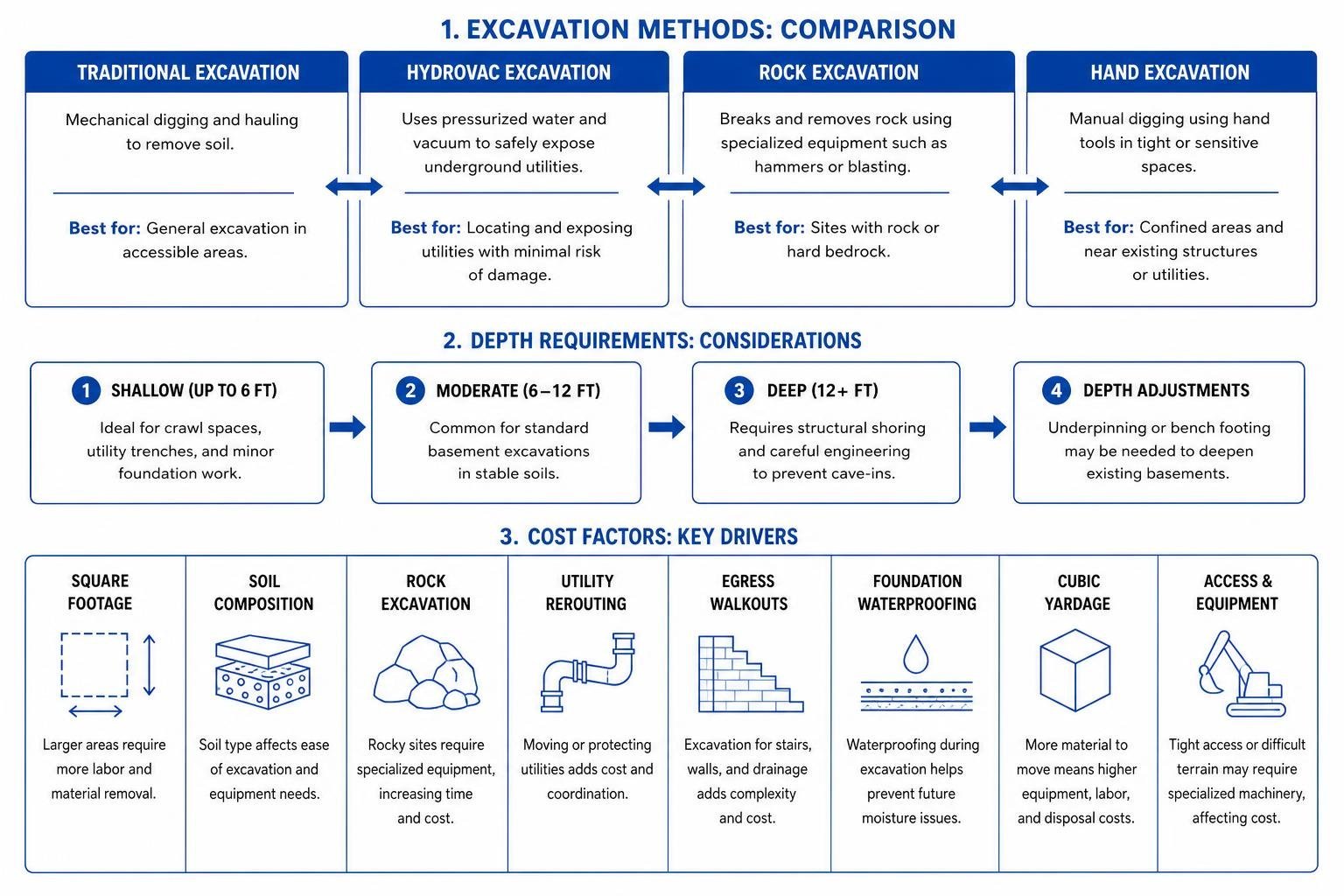
The square footage of the area to be excavated is a primary determinant, as larger areas naturally require more labor, machinery run time, and material removal. The presence of rock excavation can significantly escalate costs, as it demands specialized equipment like hydraulic breakers, rock saws, or even controlled blasting, which are expensive and time-consuming. Utility rerouting is another common cost driver; existing water mains, sewer laterals, gas pipes, or electrical lines may need to be carefully moved or protected, adding complexity and requiring coordination with municipal utility departments.
For those planning to create accessible, light-filled lower levels, the installation of egress walkouts—which include excavation for stairwells, concrete retaining walls, and dedicated drainage—adds another layer of cost and design precision. Furthermore, integrating foundation waterproofing membranes and dimple boards during the excavation phase is a critical investment to prevent future moisture intrusion, and its scope will impact the overall budget. Finally, any depth adjustments to an existing basement, such as underpinning or bench footing, are highly specialized and labor-intensive, contributing significantly to the project’s complexity, engineering requirements, and overall cost.
Why Homeowners Trust Patriot Basement Excavation Contractors for Complex Builds
Choosing an excavation contractor for a basement project is a decision that impacts the safety, structural integrity, and long-term value of your home. Homeowners look for partners who demonstrate a proven track record, rigorous technical standards, and reliable customer communication, especially for complex residential builds.
Reputable contractors hold proper contractor licensing, ensuring they meet state and municipal industry standards and are legally qualified to perform heavy earthmoving work. They also carry comprehensive liability insurance and worker’s compensation policies, protecting both the homeowner and the project crew from unforeseen accidents or property damages. Operator safety is paramount; experienced teams adhere to strict OSHA protocols, utilizing well-maintained machinery and certified personnel to minimize hazards on site.
Before any major work begins, a trusted contractor will conduct thorough structural assessments, often collaborating directly with structural engineers to understand the existing foundation loads and plan the excavation without compromising the home’s stability. They utilize quality concrete aggregates and reinforcement steel for new foundations, retaining walls, and footings, ensuring durability and full compliance with local building codes. Finally, diligent post-excavation backfilling using free-draining gravel and mechanical soil compaction is crucial to prevent future settlement, protect basement walls from lateral hydrostatic loads, and maintain proper drainage around the newly created or expanded basement. These combined attributes build the trust that homeowners place in their chosen excavation professionals for such critical undertakings.