
National Real Estate Market Trends in 2026
As we navigate July 2026, the national real estate market presents a picture of cautious stabilization. After a period of significant volatility, key indicators suggest a more predictable, albeit challenging, environment for both buyers and sellers. Mortgage rates, a primary driver of market accessibility, have settled into a range that, while higher than pandemic-era lows, is largely consistent with recent forecasts. We are seeing average 30-year fixed mortgage rates hovering around 6.3% for the year, a figure that has remained relatively stable since late 2025.
Sales volume for existing homes is projected to see a modest uptick, with forecasts suggesting a total of 4.10 million sales in 2026, representing a 1.0% increase over the previous year. This slight rise indicates a market that is slowly finding its footing, moving past the sharp declines observed in earlier periods. However, home price appreciation has significantly slowed. Experts anticipate home prices to rise by a mere 1.2% in 2026. This pace trails behind the current inflation rate, which reached 4.2% in May 2026. In real terms, this means that while nominal prices might increase slightly, homes are effectively becoming more affordable relative to other goods and services. The median U.S. home price stabilized at approximately $435,000 in June 2026, a slight dip from record highs in late 2024, further contributing to this improved accessibility.
The rental market, in contrast, is experiencing a different trajectory. Rents are expected to continue their downward trend, projected to drop another 1.2% in 2026. This is largely due to a robust pipeline of new multifamily construction, which is increasing supply and giving renters more options. This divergence between home prices and rental costs is noteworthy, as it impacts affordability and the decision-making process for many households. The national homeownership rate is expected to tick up slightly to 65.1% in 2026, indicating a gradual shift despite affordability challenges. For buyers, the typical monthly payment is projected to decrease by 1.9% year-over-year, offering some relief.
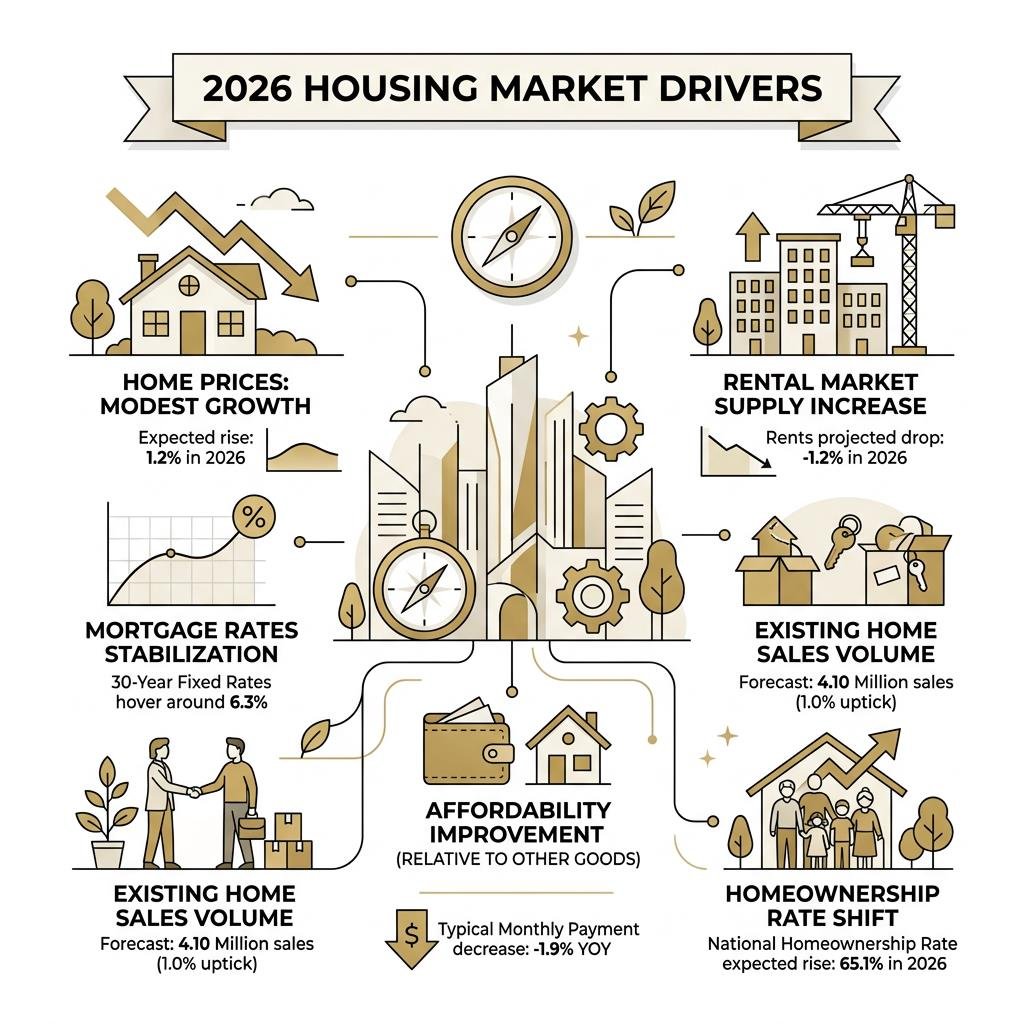
This table provides a snapshot of key metrics influencing the housing market for both buyers and renters.
| Metric | 2026 National Outlook | Buying | Renting |
|---|---|---|---|
| Home Prices | Home prices are expected to rise 1.2% in 2026, trailing inflation. | Prices are expected to decline in real terms after adjusting for inflation, potentially improving purchasing power for buyers. | Slower home-price growth may reduce pressure on rental demand over time. |
| Sales Volume | Existing-home sales are expected to total 4.10 million, a 1.0% increase from 2025. | A modest increase in sales suggests somewhat more activity in the housing market. | Increased home sales could give some renters more opportunities to transition into homeownership. |
| Mortgage Rates | Mortgage rates are projected to average 6.3% in 2026, unchanged from the December 2025 forecast. | Rates remain relatively high, continuing to affect monthly mortgage payments and affordability. | Higher mortgage costs may keep some households renting instead of buying. |
| Rental Prices | Rental prices are expected to decline 1.2% in 2026, continuing the trend of declining rental costs. | Lower rents could make saving for a down payment easier for some prospective buyers. | Renters may benefit from lower housing costs and improved affordability. |
| Homeownership Rate | The homeownership rate is expected to reach 65.1% in 2026, up from 64.8% in the original forecast. | The increase suggests a modest improvement in access to homeownership. | A higher homeownership rate could gradually reduce the share of households relying on rental housing. |
| Affordability | Home prices are expected to decline in real terms, while typical monthly payments are projected to decrease 1.9% year over year. | Improving affordability could create better conditions for buyers, although mortgage rates remain a significant consideration. | Declining rental costs may provide renters with some relief and allow more room for saving. |
| Overall Outlook | The 2026 housing market is expected to see modest home-price growth, slightly higher sales, stable mortgage rates, and declining rental costs. | Buyers may see gradually improving affordability, but borrowing costs remain an important factor. | Renters are positioned to benefit from declining rental prices, particularly in markets with ample rental supply. |
Regional Shifts and Migration Patterns
The national averages, while informative, often mask significant variations across different regions. In 2026, we are observing distinct performance trends across the U.S., largely influenced by economic growth, housing supply, and evolving migration patterns.
The Northeast corridor is showing remarkable resilience and even growth in some areas. Markets like Manchester-Nashua, NH, and Springfield, MA, have consistently appeared on “hottest markets” lists. This sustained competitiveness is often attributed to severe inventory constraints and limited room for new construction, pushing up demand and prices even as national trends cool. Buyers, priced out of major metros like New York and Boston, are increasingly looking to secondary cities in the Northeast for relative affordability, shifting the region’s competitive core.
Conversely, the West Coast has experienced some wobbles, though tech-centric markets like San Jose and San Francisco are showing strong signs of rebound, climbing significantly in overall real estate rankings. However, the region also sees a substantial outbound migration, with many homebuyers searching to leave high-cost metros like Seattle, Los Angeles, and San Francisco.
The Midwest region, while often overlooked, is demonstrating steady improvement. Chicago, for instance, has made significant gains in real estate prospects for 2026, moving up 11 spots in overall rankings. This indicates a growing recognition of its underlying economic strengths and potentially more balanced market conditions compared to some coastal areas. Dallas/Fort Worth continues to lead all U.S. markets for real estate prospects in 2026, maintaining its top spot for another year, showcasing the sustained strength of the South Central region. The Southeast also remains a strong performer, boasting the highest regional average rating for real estate prospects.
Migration patterns continue to shape local markets profoundly. Between January and March 2026, approximately 19% of homebuyers nationwide searched to move to a different metropolitan area. This outward flow is particularly pronounced from high-cost urban centers. Chicago, for example, experienced a net outflow of 19,600 homebuyers during Q1 2026, ranking among the top metros for outbound migration. These individuals are often seeking more affordable living or better job opportunities in inbound destinations such as Orlando, Sarasota, Miami, Cape Coral, and Las Vegas.
How Remote Work Influences Real Estate Market Trends
The widespread adoption of remote and hybrid work models continues to be a powerful force influencing real estate market trends. The pandemic initially accelerated a shift towards suburban and exurban demand, as individuals sought more space and perceived value outside dense urban cores. While some of that initial fervor has moderated, the underlying flexibility of remote work still drives significant migration flows and demographic shifts.
Many who can work remotely are no longer tethered to a specific office location, allowing them to prioritize factors like affordability, lifestyle, and proximity to family when choosing where to live. This has contributed to the outbound migration from expensive urban centers and bolstered demand in more affordable, often smaller, metros. While urban centers are not seeing a complete exodus, they are adapting. Demand for certain types of urban housing, particularly luxury apartments with extensive amenities, remains strong, catering to those who value city living and its conveniences. However, the overall balance of demand has shifted, requiring urban developers and planners to rethink strategies to attract and retain residents.
State-Level Analysis: California and Colorado
Examining specific states provides a clearer picture of how national trends manifest locally.
California, a bellwether for the broader U.S. market, continues to show robust, albeit moderated, activity. In May 2026, home prices in California were up 2.3% year-over-year, with a median sale price of $782,221. This growth is accompanied by an 8.0% increase in sales volume, demonstrating persistent buyer demand. However, supply remains tight, with homes for sale down 5.6% year-over-year, resulting in a low 3 months of supply—a clear indicator of a seller’s market. The market’s competitiveness is further highlighted by 36.3% of homes selling above list price in May 2026. Despite its high costs, California remains a desirable location, attracting both domestic and international interest, though it also contributes to the national outbound migration trend from its most expensive cities.
In Colorado, the housing market is transitioning towards a more balanced and sustainable environment heading into summer 2026. We are observing a notable trend where pending sales are rising statewide, even as fewer new listings enter the market. This suggests a healthy absorption of available inventory. Importantly, overall inventory is growing, providing buyers with more options and reducing the intense bidding wars seen in previous years. This shift indicates a market that is still active but moving away from the extreme seller-friendly conditions, offering more opportunities for negotiation and stability.
The Role of Housing Supply and New Construction
Housing supply remains a critical factor shaping market conditions across the nation. The estimated national homebuilding deficit of 4 million homes continues to exert upward pressure on prices and limit affordability in many regions. While new construction is underway, it faces several headwinds.
Multifamily housing starts have been robust, significantly contributing to the increased rental supply and the subsequent decline in rental prices. This segment of construction is helping to alleviate some housing pressures, particularly for renters. However, single-family home construction faces challenges, including labor shortages. The booming demand for skilled labor in sectors like AI and data center construction is drawing workers away from residential homebuilding, leading to delays and increased costs for new homes. This dynamic contributes to builders pulling back on new construction permits in some areas.
To combat these supply shortages and rising costs, developers are increasingly adopting innovative construction methods. Modular and 3D-printed construction are transitioning from niche innovations to essential scaling tools. These methods can reduce build times by up to 40% and lower costs by as much as 25%, offering a promising path to address the housing deficit more efficiently.
Furthermore, climate resilience is actively reshaping building codes and influencing where new housing is developed. As environmental concerns grow, there’s a push for more sustainable construction practices and a shift in supply toward safer zones, which can impact regional development patterns and costs.
Urban Rental Dynamics and Luxury Developments
In urban centers like Chicago, the rental market, especially in the luxury segment, plays a pivotal role in housing dynamics. Neighborhoods like River North continue to be highly sought after for their vibrant lifestyle, access to amenities, and sophisticated living options. High-rise living defines the skyline, offering panoramic views and extensive amenity spaces that cater to a discerning clientele.
Developers in these areas are focusing on creating environments that offer more than just an apartment; they provide a complete lifestyle. For example, many luxury apartments in River North boast over 30,000 square feet of indoor and outdoor amenity spaces, including rooftop pools, state-of-the-art fitness centers, and concierge services. Pet-friendly policies, allowing up to two pets per unit with specific breed restrictions, are also a common and highly valued feature, recognizing the importance of companion animals to urban residents. The integration of smart home technology, such as automated lighting and shades, is becoming a standard expectation, enhancing convenience and modern living. These features contribute to the appeal of places like The Bush Temple, a prime example of luxury apartments in River North that cater to a sophisticated urban demographic.
Strategic Guidance for Buyers, Renters, and Agents
Navigating the current real estate market requires a strategic and informed approach. For homebuyers, the environment of stabilizing prices and slightly lower mortgage rates presents a unique opportunity. Rather than waiting for pandemic-era rates, which are unlikely to return soon, consider buying now and planning to refinance later if rates drop further. Negotiating power has increased, especially for new construction, where builders may offer incentives like closing cost assistance or rate buydowns. Expanding your home search to more affordable neighborhoods or considering a slightly smaller property can also unlock opportunities.
For renters, the declining rental costs offer greater flexibility. This period of increased supply and lower prices can be an excellent time to find better value, negotiate lease terms, or consider moving to a more desirable location. However, it’s important to monitor local multifamily construction pipelines, as the pace of rent relief may vary by market.
Real estate agents play a crucial role in guiding clients through these shifting dynamics. It’s essential to ground advice in local market data rather than relying solely on national headlines.
Leveraging Data-Driven Pricing Strategies in a Shifting Market
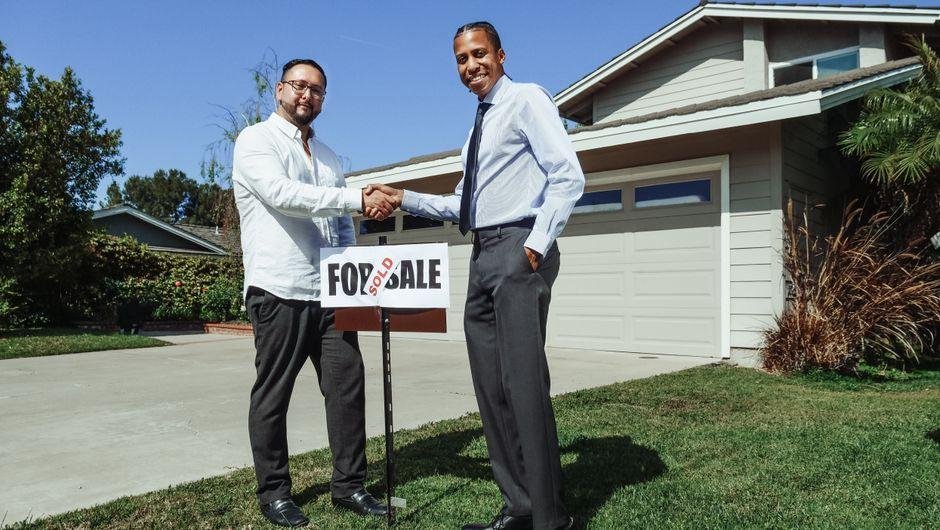
In a market where home price growth is slowing and inventory is gradually increasing, leveraging data-driven pricing strategies is paramount for sellers. We recommend agents compare national outlooks with hyper-local MLS metrics, such as months of supply in a specific price range, recent sale-to-list price ratios for comparable properties, and median days on market. This granular approach provides a realistic view of local conditions, which can differ significantly from broader trends.
For sellers, it’s crucial to set realistic asking prices upfront. Overpricing in a cooling market can lead to longer days on market and eventual price reductions, which can deter potential buyers. By analyzing local trends, agents can help sellers understand buyer price sensitivity and position their homes competitively. Establishing a defined review point with sellers to reconsider price or marketing if showing activity is weak is also a best practice. For professionals seeking to refine their approach, exploring data-driven pricing strategies can provide valuable insights into market analysis and client communication.
Future Outlook: Real Estate Market Trends for Late 2026
As we look toward the second half of 2026, the real estate market is expected to continue its trajectory of stabilization. Mortgage rates are projected to remain in the low-to-mid 6% range, with some forecasts predicting an average of 6.3% to 6.5% for the year. This stability, coupled with modest home price increases of around 1.2%, suggests a less volatile environment than previous years.
Inventory growth is anticipated to continue, with existing-home for-sale inventory projected to increase by 3.6% year-over-year. This gradual increase in supply will further contribute to market balance, giving buyers more options and reducing the urgency often associated with competitive markets. While sales volumes are expected to see a slight increase, the overall market will likely be characterized by a slower pace of transactions.
Economic indicators, including inflation and labor market conditions, will continue to influence these trends. A resilient labor market and efforts to manage inflation are key to maintaining this period of stabilization. The focus for many will be on long-term value and strategic planning rather than rapid appreciation.
Frequently Asked Questions About the 2026 Housing Market
What are the projected mortgage rates for the second half of 2026?
For the second half of 2026, mortgage rates are widely projected to remain stable, generally hovering in the low-to-mid 6% range. While some forecasts, like NAR’s, predict an average of 6.5%, others, such as Realtor.com, anticipate around 6.3%. This consistency reflects ongoing efforts by the Federal Reserve to manage inflation and a general market adjustment to a “new normal” after years of ultra-low rates. Geopolitical events and economic forecasts will continue to be key factors influencing minor fluctuations, but significant deviations from this range are not widely expected.
How is the rental market performing compared to the homebuying market?
The rental market is performing quite differently from the homebuying market in 2026. While home prices are expected to see a modest increase of 1.2% (effectively declining in real terms when accounting for inflation), rental prices are projected to drop by 1.2%. This divergence is largely driven by a robust pipeline of multifamily construction, which has significantly increased rental supply. As a result, rental vacancy rates have increased to around 7.3-7.5%, giving renters more options and negotiating power. For many, renting currently offers a cost advantage over buying, particularly in high-cost urban areas, leading to greater renter mobility and flexibility in lease terms.
Why are some regional markets remaining highly competitive while others cool?
The varied performance of regional markets stems from a combination of factors, primarily local housing supply, regulatory constraints, and migration patterns. Markets that remain highly competitive, such as many areas in the Northeast corridor, often have limited physical or regulatory room to build new housing. This inherent supply constraint means that even with cooling national trends, demand continues to outstrip the available inventory, leading to sustained competition and price growth. Conversely, regions with ample land for development or less restrictive building codes tend to cool faster as new supply can more readily meet demand. Migration patterns also play a role, with areas experiencing significant inbound migration (often seeking affordability or job opportunities) maintaining stronger demand compared to those with net outflows.
Conclusion
The real estate market in July 2026 is characterized by a nuanced blend of stabilization and regional diversity. We are witnessing a shift towards a more balanced environment, where modest home price growth and declining rental costs signal improved affordability for many. Mortgage rates, while higher than recent historical lows, have found a new equilibrium, offering predictability for long-term financial planning. The ongoing influence of remote work continues to reshape migration patterns, driving demand in new areas and prompting urban centers to adapt.
New construction, particularly innovative methods like modular building, is crucial in addressing the persistent housing deficit. For both buyers and renters, understanding these dynamics and leveraging data-driven insights is key to making informed decisions. Strategic planning, whether it’s setting realistic expectations for sellers or exploring alternative financing for buyers, will be essential for navigating this evolving landscape. As the market continues to adjust, a focus on long-term value and local conditions will empower individuals to achieve their housing goals.