
Diabetes affects your whole body, including your mouth. Poor blood sugar control can inflame your gums, weaken your bone, and loosen your teeth. In turn, gum infection can make your blood sugar harder to control. This two way link often goes unseen. You might focus on glucose checks and medicine and miss bleeding gums or bad breath. Yet these signs can warn you early. Regular periodontal care can lower inflammation, protect your teeth, and support steadier blood sugar. Simple steps help. You can brush, floss, and see your dentist on a set schedule. You can also ask how gum health affects your A1C. Even choices like a dental implant in Lake Ridge can matter for chewing, nutrition, and long term control. When you treat your gums as part of diabetes care, you protect your body, your comfort, and your daily strength.
How Diabetes Affects Your Gums
Diabetes raises sugar levels in your blood. It also raises sugar levels in your saliva. This change feeds harmful mouth bacteria. Those bacteria form sticky plaque along your gumline. Over time, plaque hardens into tartar that you cannot remove at home. Your gums respond with swelling and bleeding.
When you live with diabetes you face three common mouth problems.
- Red and bleeding gums during brushing.
- Gum pulling away from teeth and bone loss.
- Slow healing. Mouth sores and extraction sites that stay open.
These problems are more common when your A1C stays high. The risk also rises if you smoke or chew tobacco. It rises again if you miss dental cleanings. Each factor stacks pressure on your gums and bone.
How Gum Disease Pushes Blood Sugar Higher
Gum disease is an infection. Your immune system works hard to fight it. That fight releases chemicals that spread through your blood. Those chemicals interfere with how your body uses insulin. Then your blood sugar rises and stays high.
This cycle can trap you.
- Poor control of blood sugar feeds gum infection.
- Ongoing gum infection makes control of blood sugar harder.
- Higher blood sugar invites more infection and tooth loss.
Breaking this cycle takes steady care of both conditions at the same time. You can treat your gums while you track your sugar, food, and medicine. Each step supports the other.
What Research Shows About The Link
Studies from public health experts confirm the connection between diabetes and gum disease. The Centers for Disease Control and Prevention reports that people with diabetes have higher rates of severe gum disease. Research also shows that treating gum disease can improve blood sugar control.
Here is a simple comparison of risks.
| Condition | Risk Of Gum Disease | Impact On Blood Sugar
|
| No diabetes | Lower | Gum infection less likely to affect A1C |
| Diabetes with good control | Moderate | Some effect on A1C if gums stay infected |
| Diabetes with poor control | High | Stronger effect on A1C and daily readings |
These patterns appear across many age groups. They also appear in both type 1 and type 2 diabetes. Gum health is not a side issue. It is part of your core diabetes plan.
Warning Signs You Should Not Ignore
Gum disease does not always cause pain. You might not feel it until the damage is serious. Watch for three key signs.
- Gums that bleed during brushing or flossing.
- Bad breath that stays even after brushing.
- Loose teeth or changes in how your teeth fit together.
Other signs include receding gums, pus between teeth, or dentures that no longer fit. If you notice any of these, contact your dentist soon. Early care can save teeth and protect your blood sugar.
Daily Steps To Protect Your Mouth And Blood Sugar
You can control many risk factors at home. These steps are simple, yet they carry real power.
- Brush at least twice a day with fluoride toothpaste.
- Floss once a day to clean between teeth and under the gumline.
- Rinse with an alcohol free mouthwash if your dentist suggests it.
You can also take three more actions that support your diabetes plan.
- Keep your A1C as close to your target as you can.
- Drink water instead of sugary drinks.
- Quit smoking or vaping and avoid all tobacco.
The National Institute of Dental and Craniofacial Research offers more guidance on these daily habits. You can share this information with your family so they can support you.
Working With Your Dental And Medical Teams
Your mouth care team and diabetes care team should share information. You can help that happen. You can.
- Tell your dentist and hygienist that you have diabetes.
- Share your most recent A1C and any changes in medicines.
- Ask your dentist to send reports to your primary care clinician.
Before gum surgery or a deep cleaning, your dentist may ask for lab work. Your medical team may adjust your insulin or pills around the time of treatment. Good planning lowers risk and supports healing.
Periodontal Treatment Options And Diabetes
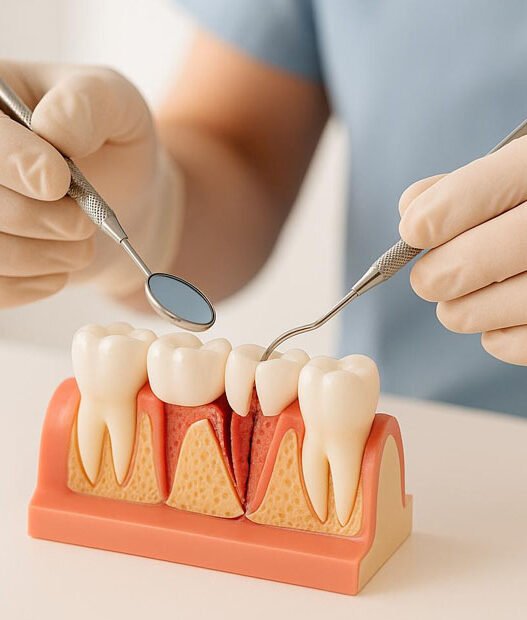
If you have early gum disease, your dentist may suggest deeper cleanings called scaling and root planing. This treatment removes tartar and bacteria from below the gumline. It gives your gums a clean surface so they can reattach to your teeth.
For more severe disease, you may need surgery to reduce pockets or rebuild bone. You might also need new tooth replacements. These can include bridges, partial dentures, or implants. Each option has benefits and limits when you live with diabetes.
| Treatment | Goal | Key Point For Diabetes
|
| Scaling and root planing | Remove deep plaque and tartar | Often improves gum health and may help A1C |
| Gum surgery | Reduce pockets and save teeth | Needs tight sugar control for healing |
| Tooth replacement | Restore chewing and speech | Supports nutrition and blood sugar goals |
You and your dentist can choose a plan that fits your health status, budget, and daily life. Clear questions lead to better choices.
Protecting Your Health For The Long Term
Periodontal care is not cosmetic. It protects your mouth, your blood vessels, and your heart. When you treat bleeding gums as a warning sign, you claim control. When you keep regular cleanings, you lower the risk of infection. When you plan tooth replacement, you protect your ability to eat well.
Your mouth is part of your diabetes story. When you care for both together, you reduce pain, avoid tooth loss, and support steadier blood sugar. Each visit, each cleaning, and each honest talk with your care team moves you toward a safer life.